A new blueprint for mobility hubs
Inside the shift from fuel stops to lifestyle hubs: where convenience, technology, and community redefine the future of mobility.
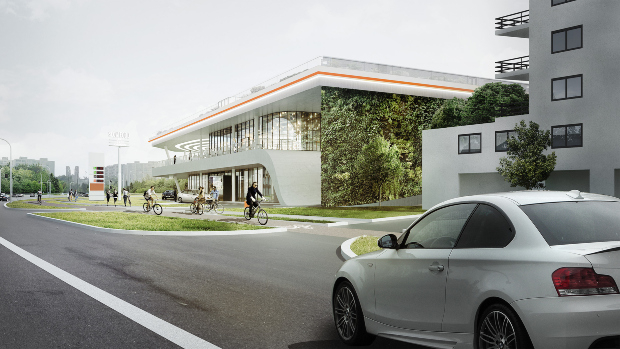
The role of real estate in mobility is undergoing a meaningful evolution, driven not only by shifting customer expectations but also by how major fuel and convenience networks are redefining the purpose of their sites. In North America, the ongoing consolidation of the fuel retail and c-store market signals a wider effort to rethink how networks should function. Europe is entering a moment of recalibration, with the EU weighing a delay to new decarbonization proposals expected to be defined around the December 10th announcement of its automotive support package. As policymakers revisit the roles of efficient combustion engines and cleaner fuels like biofuels amid slower EV uptake, operators are adopting more flexible, technology-agnostic approaches to site development. Meanwhile, major Middle Eastern players expanding into markets such as Latin America and Africa are introducing investment models that emphasize multifunctional, future-ready locations.
This transformation goes beyond infrastructure: it reshapes how locations are imagined, what experiences they enable, and the role they play in people’s daily routines. From neglected lots being regenerated into mobility hubs or the evolution of large travel centers into hybrid retail-mobility destinations, the industry is embracing a new blueprint for what a service station can be.
Space with purpose
For decades, a station’s footprint was defined almost entirely by its fueling needs. The bigger the forecourt, the more vehicles it could serve; everything else was secondary. That equation is now being rewritten and, although size still matters, it is no longer a measure of throughput but a measure of what a site can ultimately become. This shift is particularly visible in markets where real estate scarcity and strong operational performance are reshaping how networks grow.
A recent industry study by myAutomate shows that the UK’s fuel retail market continues to strengthen, with rising margins and network expansion occurring despite declines in fuel volumes. Combined with increasingly limited property availability, these conditions are renewing interest in existing sites and pushing operators to extract more value from smaller or spatially constrained parcels.
Rapleys’ latest 2025 Alternatives Report reinforces this trend, noting that portfolio consolidations and strategic expansions by major operators have helped reverse the previous year’s decline in total stations. Together with regeneration models like Zest’s, these examples show how operators are maximizing constrained sites rather than relying on traditional forecourt scale.
Designed for demand
As operators rethink how to make the most of their sites, the definition of a station’s “offer” is widening far beyond the products on the shelves. Technology, data, and customer experience now shape the commercial logic of a site as much as its physical footprint, a shift echoed in the 2025 Downstream Fuel Industry Report from Titan Cloud and NACS Research. The study points to digitalization, automation, and operational intelligence as the leading priorities for operators navigating tighter margins and rising expectations.
Technology has moved beyond a supporting role, it has become the backbone of how modern service hubs operate. The Titan Cloud report shows that 47% of mid-market fuel retailers now rely on automation for fuel deliveries and inventory management, while another 25.3% use digital tools to streamline back-office operations and reduce inefficiencies. As Paul Lauinger, VP Sales North America at Titan Cloud, notes, “investment in the right in-house technology, particularly a unified platform, provides a strategic advantage.”
Once the operational backbone is in place, attention shifts to what truly shapes the customer experience: the offer. As Boston Consulting Group’s (BCG) Service Stations Should Up Their Convenience Game highlights, consumers still prioritize fundamentals such as accessibility, competitive pricing, and efficient store layouts; yet the real opportunity lies in the attributes that go beyond these basics. BCG points to the growing power of “delighters,” elements that customers don’t explicitly demand but reward with greater loyalty when present. In the US, for instance, an expanded selection of packaged food, beverages, and household essentials has shifted from a nice-to-have to a true differentiator.
As fuel becomes commoditized, experience becomes the anchor; as the most successful operators design offers that feel intentional, relevant, and connected to the communities they serve.
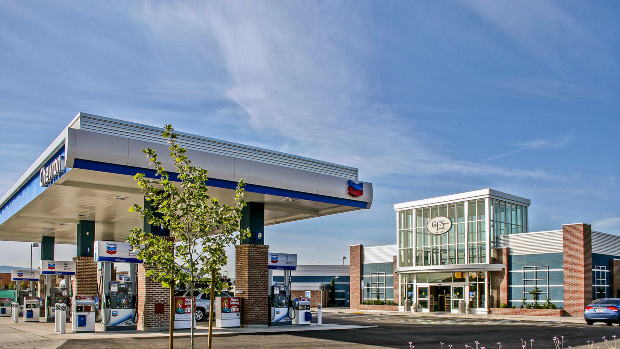
Community in motion
As mobility retail becomes increasingly shaped by lifestyle rather than fuel, community becomes a natural extension of that evolution. Even as consumers move effortlessly between online, social, and in-app shopping, the EY Future Consumer Index shows that customers still crave the personal service only physical spaces can offer. Reflecting this same demand, research from EY and the World Retail Congress finds that retailers are repurposing physical sites into community-oriented, service-rich hubs that better fit into people’s daily routines.
As this evolution becomes more visible on the ground, leading operators are already translating community-oriented mobility into tangible formats. ADNOC’s The Hub concept in the UAE exemplifies the destination-first model: sites roughly three times the size of a traditional station, integrating fuel, ultra-fast charging, dining, leisure areas, sports zones, and family-friendly amenities.
A similar trajectory is unfolding across Latin America, a transformation underscored by Argentina securing the NACS Latin American Retailer of the Year Award three years running. These developments reveal how service stations are stepping into a new role within the urban landscape, evolving from simple pit stops to neighborhood destinations. With that shift underway, the challenge now is understanding the consumers behind these emerging communities
To truly understand customers, data is essential, and loyalty programs play a pivotal role. Yet the loyalty race is intensifying: as apps multiply, saturation grows and engagement wanes. To stay relevant, retailers are building local, connected ecosystems where rewards deliver ease, speed, and seamless experiences.
As efficiency becomes a valued currency, the new blueprint for mobility combines essential fueling with lifestyle-driven experiences, creating spaces where energy meets everyday life.