The Future of Digital Payments and Self-Service: The Transformation Has Already Begun in Latin America
Ad
As digital payments and self-service gain momentum, Latin American service stations are evolving into more connected, efficient and customer-centric destinations.
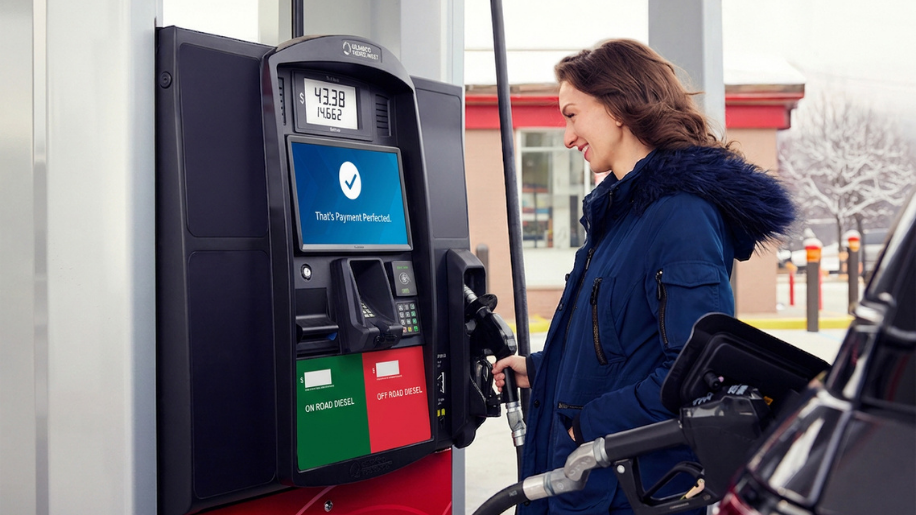
For decades, the fueling experience changed very little. Today, that reality is beginning to shift. Evolving consumer habits, the growth of digital payments and the need to operate more efficiently are driving a new generation of service stations across Latin America.
Digitalization is no longer just a competitive advantage. It is increasingly becoming an essential component of the industry's evolution. In this context, technologies such as pay-at-pump solutions and self-service models are redefining the relationship between service stations and their customers by delivering faster, more secure and more convenient experiences that align with modern consumer expectations.
For Gilbarco Veeder-Root, a global leader in fuel management and automation solutions for service stations, fleet operations and EV charging infrastructure, this transformation represents the next step in the evolution of an industry moving toward increasingly connected, automated and customer-centric operations.
Consumers demand speed, autonomy and digital experiences
Consumer behavior is changing the way people interact with virtually every service. Immediacy and the ability to complete transactions using mobile devices or contactless technologies are becoming increasingly important components of the customer experience.
According to the National Association for Convenience Stores' (NACS) State of the Industry 2025 report, cash payments at service stations in the U.S. market continue to decline, accounting for just 17.4% of total sales value. By contrast, card payments and electronic transactions represented 82.1% of sales.
While pay-at-pump adoption is progressing at different speeds across Latin America, the region already offers examples that demonstrate the viability of this technology and point toward a broader transformation of the service station experience.
From innovation to standard practice: the evolution of pay-at-pump
The history of pay-at-pump technology began more than five decades ago in the United States. The first payment system integrated directly into a fuel dispenser was introduced in Texas in 1973. By 2002, the technology was available at nearly 80% of service stations, eventually becoming a standard feature across the U.S. market.
Latin America began its own transformation later. Argentina, for example, took an important step forward in 2025 with the introduction of payment systems that allow customers to pay directly at the dispenser using bank cards, contactless payments and mobile devices.
Mexico has also begun advancing the implementation of payment terminals integrated directly into fuel dispensers, while developments in markets such as Colombia, Peru and Chile are creating the conditions for a gradual transformation.
Rather than a trend concentrated in a single country, this represents a regional evolution. At different speeds and according to the regulatory and operational characteristics of each market, Latin America is building a new generation of service stations.
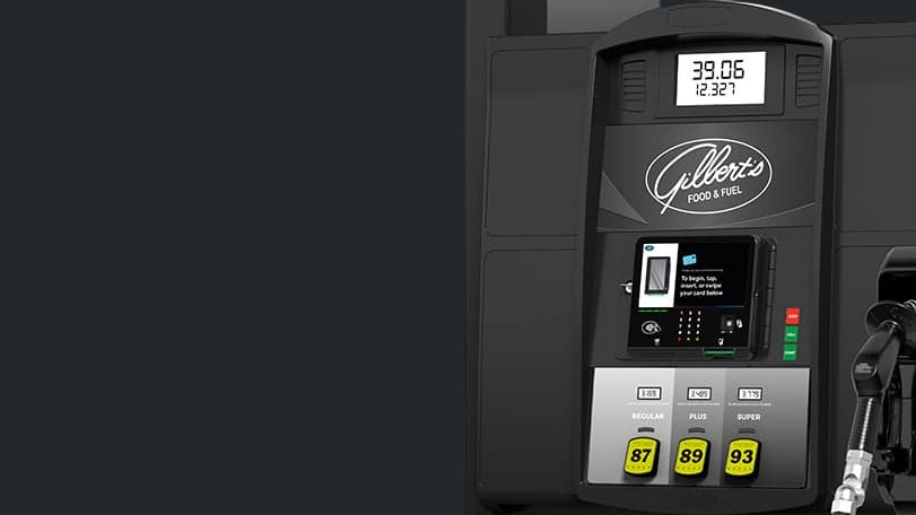
Gilbarco Veeder-Root: Technology to transform the service station
The digital transformation of a service station requires much more than introducing new payment methods. It involves connecting technological infrastructure, financial systems, operational control platforms and solutions capable of delivering a secure experience for both consumers and operators.
With more than 150 years of history and innovation, Gilbarco Veeder-Root has supported the evolution of the energy industry through various stages of transformation. Today, its expertise in payment solutions, automation, fuel management and intelligent site operations enables the company to drive the modernization of Latin American service stations through a comprehensive approach.
Gilbarco Veeder-Root also understands that security is a critical component of the customer experience. By enabling payment directly at the dispenser, users can maintain control of their payment card or mobile device throughout the transaction, reducing payment handling and helping strengthen consumer confidence.
The next service station will be more digital, connected and autonomous
The industry's evolution is already underway, although the pace varies from one country to another. Regulations, payment habits and operating models differ across markets, but the direction of change is shared: transforming fueling from an isolated transaction into an integrated and connected experience.
For operators, this means approaching modernization not only from the perspective of today's infrastructure needs, but also from their ability to adapt to the technologies, payment methods and customer expectations that will shape the years ahead.
Among the trends currently transforming the industry are WhatsApp bots that automatically generate invoices for customer purchases, QR code payments, CoDi, NFC technology, digital wallets and even facial recognition for digital and contactless transactions. The result is greater speed, convenience and security for customers, leading to stronger loyalty, increased visit frequency and, ultimately, higher average transaction values.
For service station owners, technology is also becoming a fundamental ally. Artificial Intelligence and Big Data, for example, can identify vehicle license plates to create customer profiles and recommend offers based on fueling habits, monitor and detect incidents, and even support the integration of robotic fueling systems capable of dispensing fuel without human intervention.
Because the future of service stations will not depend solely on how customers refuel, but on how intelligent, secure and connected the overall experience can become. Fuel will remain important, but it may no longer be the sole reason consumers visit a service station.
That is why talking about the service station of the future is not only about artificial intelligence, automation or electric vehicles. It is about adaptation. It is about understanding that consumers have changed, mobility is changing and energy is changing as well. The stations that successfully combine technology, security, efficiency, sustainability and customer experience will have the opportunity to become something much greater: true mobility and service hubs.
The challenge is not to predict what the service station will look like in ten or twenty years. The challenge is to begin building it today. The industry's transformation is already underway and, for Gilbarco Veeder-Root, that transformation has already begun.